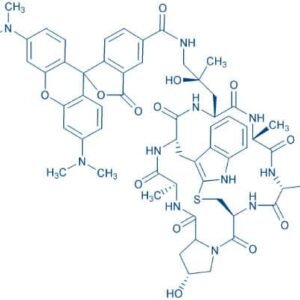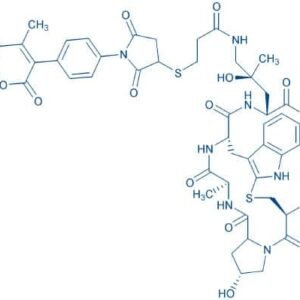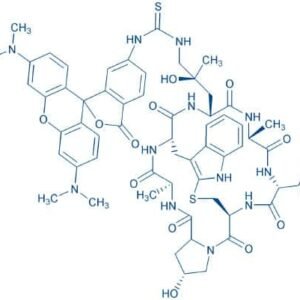
Description
This CRF fragment may have two different beneficial effects in Alzheimer’s disease (AD). First CRF (6-33) dissociates CRF from the CRF-binding protein and may therefore be able to restore the dramatic reduction of free CRF content in AD. Second this fragment shows cognition-enhancing properties in animal models of learning and memory, without the characteristic anxiogenic effects of CRF receptor agonists, and may therefore be useful in the treatment of memory deficits seen in AD.